Three-year measurements of indoor air temperature and relative air humidity in a large office were evaluated for the month of February. The temperatures of the supply heating medium were also assessed.

As a consequence of the growing production and use of asbestos and inorganic fibres, measurement of their concentration in indoor air is of great importance. The relevant legal regulations require the measurement. Various methods were developed for the purpose, based on collecting airborne particles in capillary membrane filters and subsequent determination of their number concentration. Remediation of buildings with fiber-containing construction elements is an essential part of any reconstruction.

Starting from January 1, 2023 (in the Czech Republic), on the basis of § 4, paragraph 1 of Decree No. 264/2020 Coll., on the energy efficiency of buildings, it is necessary for buildings or zones with cooling, humidity control or electricity production to calculate the energy efficiency of the building with an interval of one hour. The subject of the article is an approximation of the basic specifics of the hourly step of calculation and a comparison of the results of the calculation and the assessment of energy intensity in the monthly and hourly step of calculation according to the requirements of the applicable legislation.

The paper relates the results of efficiency tests of specific application methods of surface and air remediation in the indoor environment of buildings, the scope and supply of which have significantly expanded in connection with the ongoing SARS-CoV-2 epidemic. The tests were focused on the most frequently offered procedures, i.e. on the use of open and closed (air purifiers) sources of UV-C radiation, fumigation (use of biocides) and ozonation. Special attention is paid to fulfilling the wording of related EU laws and regulations and compliance with safety principles in the application of these procedures in the work and municipal environments. We also give examples of numerous problems and shortcomings in the application of these technologies.
The presented set of four communications deals with the risk management in favour of safety applied to the operation of pipelines. It respects current professional knowledge and presents it in the concept promoted by the UN, the European Union, the OECD and others. The fourth part contains a conclusion, characteristics of new aspects addressed by the professional sphere for practice and a list of used literature.
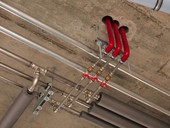
The presented set of four communications deals with the risk management in favour of safety applied to the operation of pipelines. It respects current professional knowledge and presents it in the concept promoted by the UN, the European Union, the OECD and others. The third part summarizes the findings on the checklist methodology and provides examples for pipelines.
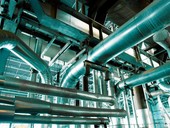
The presented set of four communications deals with the risk management in favour of safety applied to the operation of pipelines. It respects current professional knowledge and presents it in the concept promoted by the UN, the European Union, the OECD and others. The second part summarizes the knowledge and principles of risk management and lists the sources of risks for the pipeline.

The presented set of four communications deals with the risk management in favour of safety applied to the operation of pipelines. It respects current professional knowledge and presents it in the concept promoted by the UN, the European Union, the OECD and others. The first part introduces terms used in engineering practice, which deals with risks and safety and introduces knowledge that is relevant to pipeline safety.
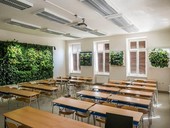
This post discusses the possibilities of using green walls and their impact on the living environment, micro-climatic conditions and the overall perception of comfort in the interior. Green walls, or vertical gardens, are a desired architectural element of spaces, whether external or internal, for their aesthetic value and significant ability to favorably influence the environment in which we live. Vertical gardens improve acoustics, humidify, freshen and cool the air, capture dust and clean the air. The green wall also functions as a very effective heat and sound insulation system. Any larger green area fundamentally increases the quality of the microclimate, and therefore also people's lives.
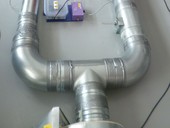
The paper focuses on the experimental verification of the use of CO2 as a tracer gas for the detection of leakages in air handling systems, instead of the widely used tracer gas of sulphur hexafluoride (SF6), which is subject to legislative restrictions. Verification of the applicability of CO2 is accompanied by the definition of measurement uncertainties.
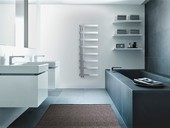
The article deals with the currently discussed issue of moisture in the environment of flats. In winter, the low relative humidity of habitable rooms creates a problem for proper ventilation. The authors wonder whether that excessive moisture produced during bathing or showering could be used to improve the quality of the moisture microclimate in the habitable rooms.
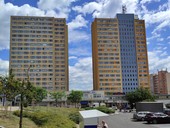
Stricter ENB criteria and efforts to enforce a comprehensive view, not only the energy needs associated with housing, but also the place of residence, mode of transport, etc. show that the current situation is not systematically resolved. Meeting the new criteria in existing buildings, many of which have not even undergone basic insulation, will be very challenging, albeit necessary.
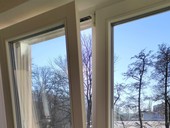
Ventilation infiltration in the form of leaking windows, doors is associated with unwanted heat leakage in cold periods. The size of the leakage depends on both the intensity of ventilation and the amount of energy contained in the air. The calculation should include not only the specific heat capacity of the dry air, but also the energy contained in the water vapor in the air.
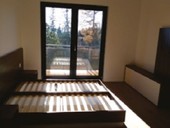
The presented paper deals with the evaluation of the indoor environmental quality (IEQ) in two apartment units in different stages of interior construction - in the initial state and in the final state of a completely furnished apartment. The results of IEQ monitoring confirmed the minimal differences between an unfurnished apartment and a fully furnished apartment in terms of thermal-humidity microclimate. The average particulate matter concentrations of the two representative fractions (PM2.5 and PM10) were higher for apartment in the initial state. On the contrary, higher concentrations of total volatile organic compounds (TVOC) were recorded in the case of a furnished apartment. The legislative limit for PM10 (50 µg/m3) and the maximum recommended Mølhave value (200 µg/m3) for TVOC were exceeded several times in both apartments. In the case of unfurnished apartment, workers are exposed not only to increased concentrations of TVOC, but also to increased concentrations of PM, and should therefore pay attention to the protection and safety of health at work. More detailed monitoring aimed at identifying and determining the target VOCs showed the presence of xylenes and ethylbenzene in the indoor air of an unfurnished apartment. In addition to xylenes and ethylbenzene, toluene was present in the furnished apartment. Concentrations of these compounds were below legislative limits, except for ethylbenzene, for which no legislative limits are set. It follows from the above that further surface treatment and furnishing of the apartment contributes to increasing the level of VOCs in the indoor environment.
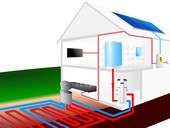
The heat pump with earth wells is a source of heat and cold for a university building in the center of Prague. Analyzes of measured data from the operation of this system are performed and the issue of parallel production of heat and cold in the context of sustainable development and buildings with minimal energy consumption is discussed.

High quality of the indoor environment expressed by indicators such as air temperature, relative humidity, concentration of carbon dioxide, or lighting has great impact on human health, comfort and performance. Therefore, the contribution focuses on the effect of an increase in indoor temperature on energy consumption.

Přihlaste se k odběru newsletteru a my vám každý týden pošleme přehled toho nejlepšího z TZB-info!
více o newsletteru